
Gitxsan Secondary School
This new Indigenous high school, located in northern BC, will serve the three First Nation communities of Gitwangak, Gitanyow, and Gitsegukla, whose objective is to “Empower [their] youth through a new secondary school that will offer an innovative combination of provincial curriculum and Gitxsan traditional learning”.
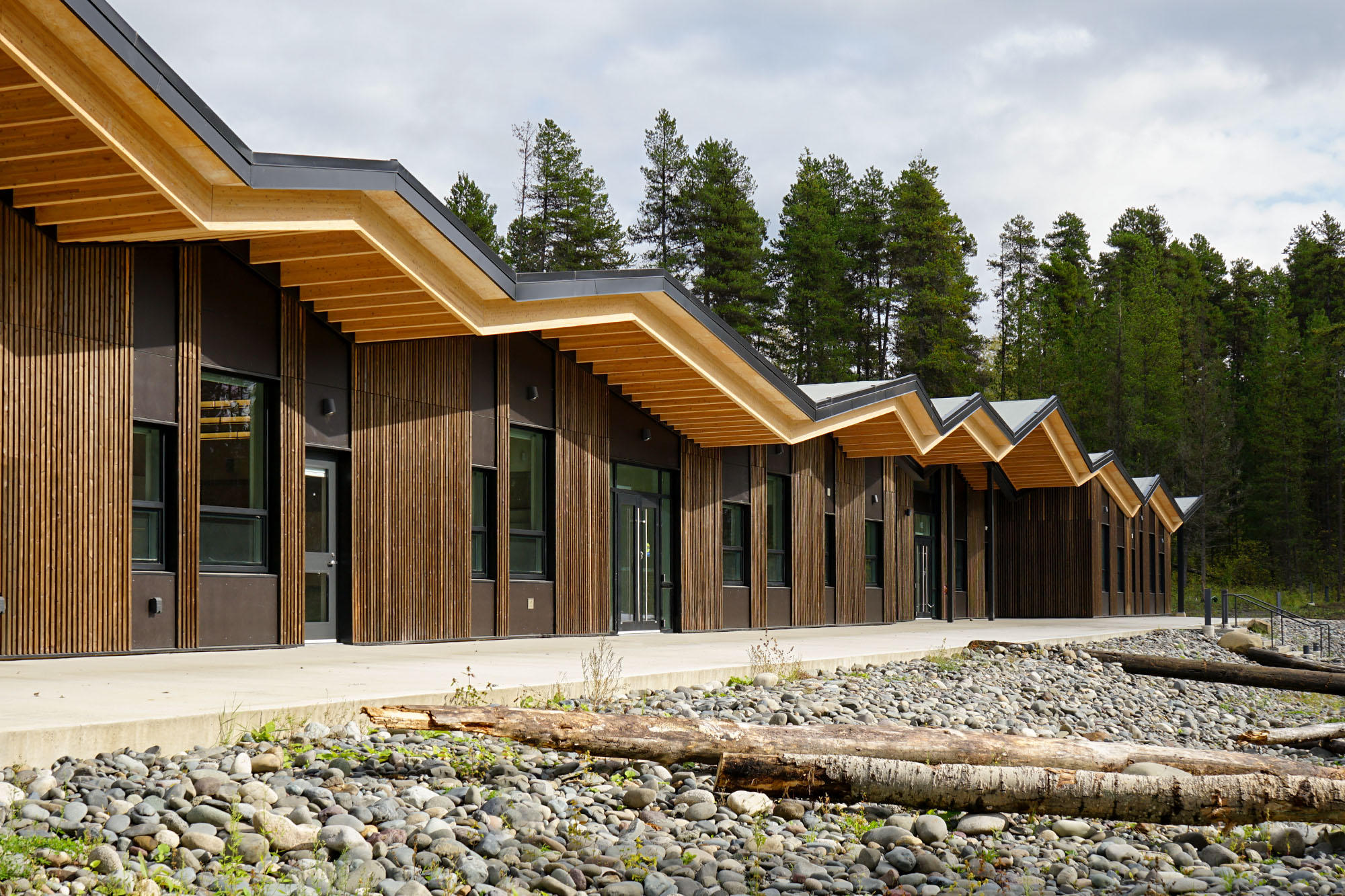
The Gitxsan peoples’ ancient pattern of settlement along the banks of the Skeena River is intrinsic to the architecture, so that the Gitxsan youth may experience this relationship each school day; Raised on a bank, the architecture presents an undulating form that may be read as both village front and the mountains beyond. Combining education and culture, the concept connects the youth to who they are as Gitxsan people and fosters their educational success.
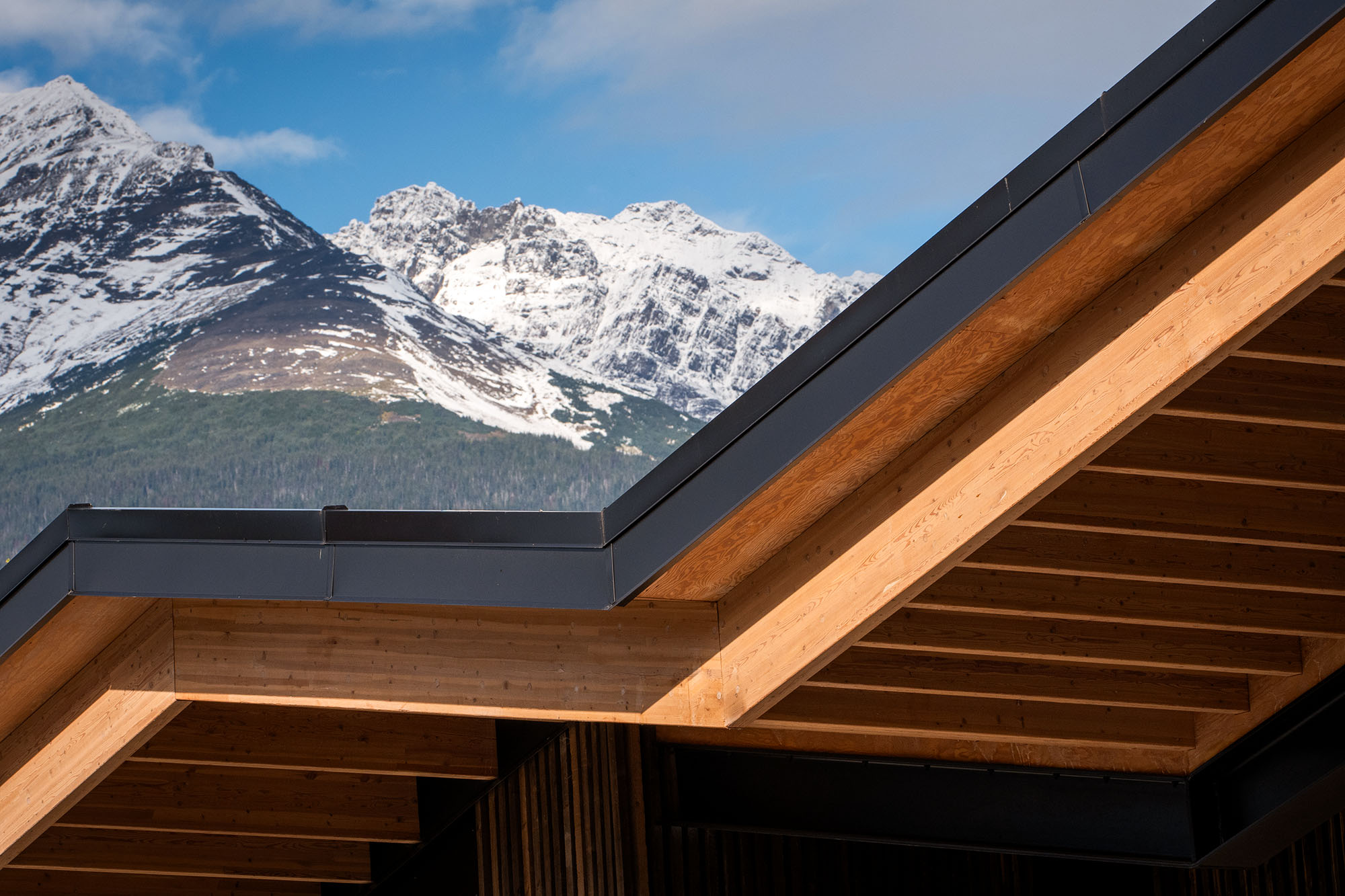
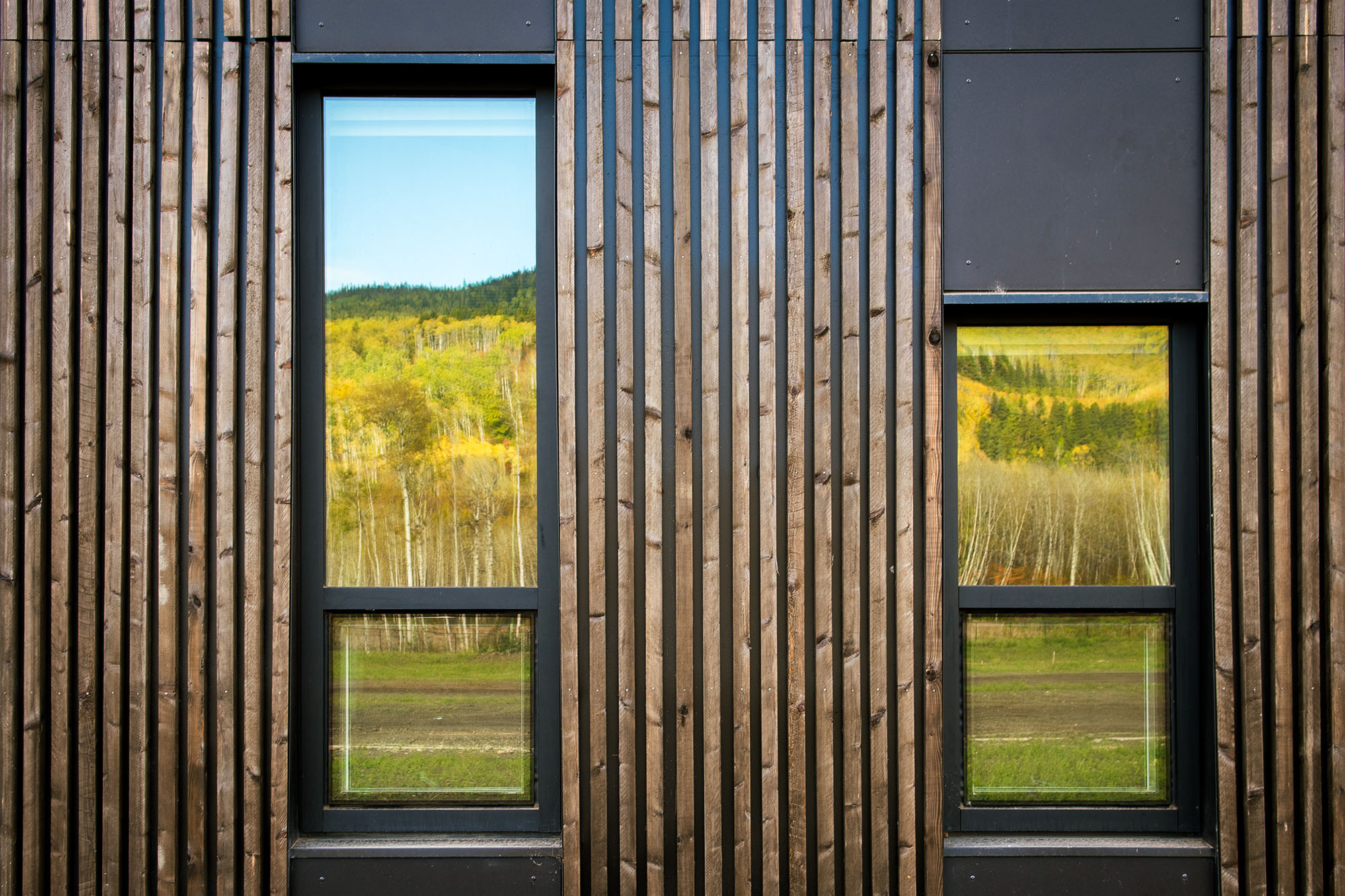
The building will be important both as a school and a community centre. The gym is linked to a raised stage by a moveable acoustic partition, which allows the stage to serve double-duty as a drama/music/and dance classroom. At the heart of the school is a feast hall which functions as a lunch room, multi-purpose room and event space. It is served by a commercial kitchen, able to provide a lunch program that can include traditional foods, and to support community events.
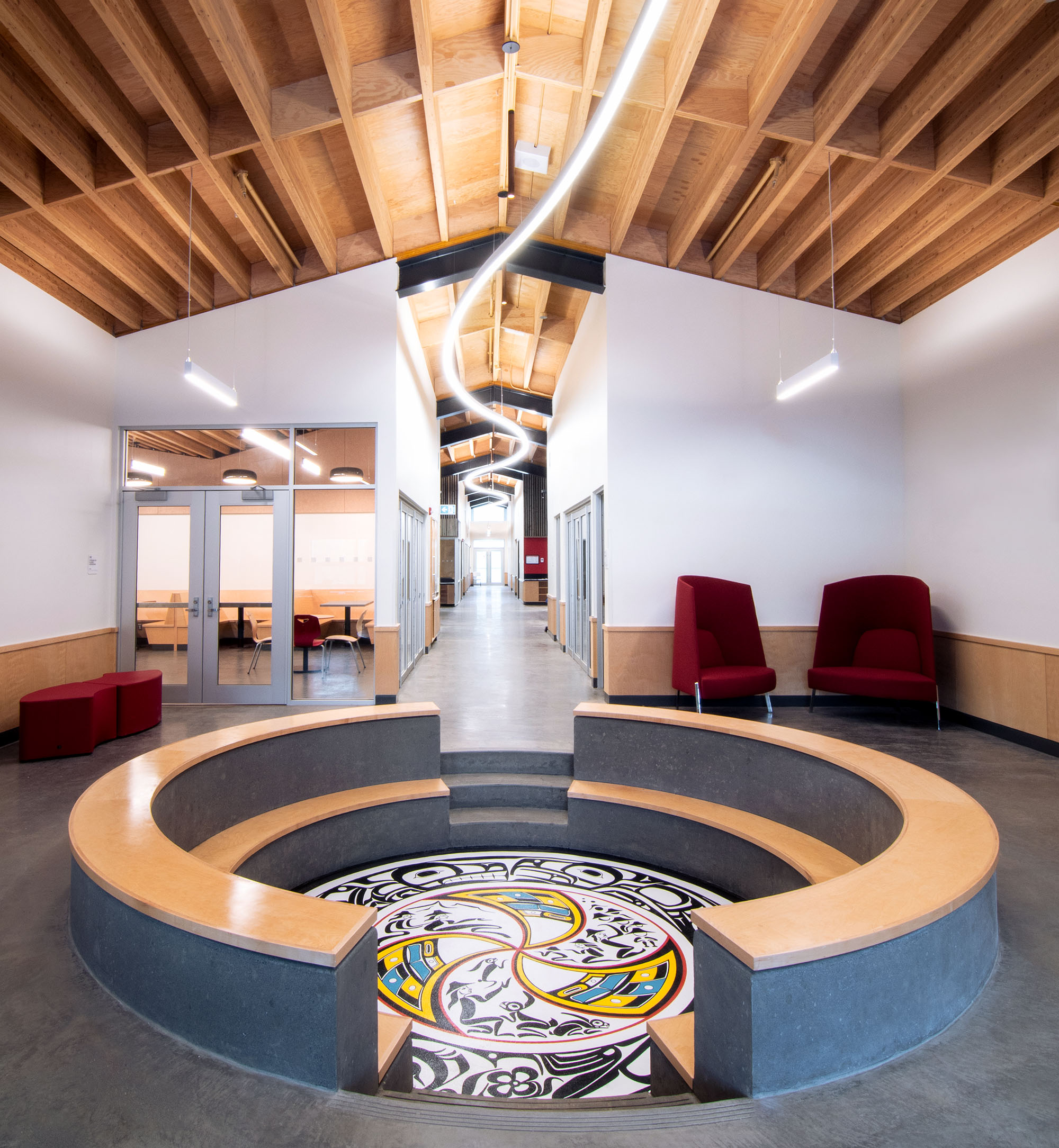
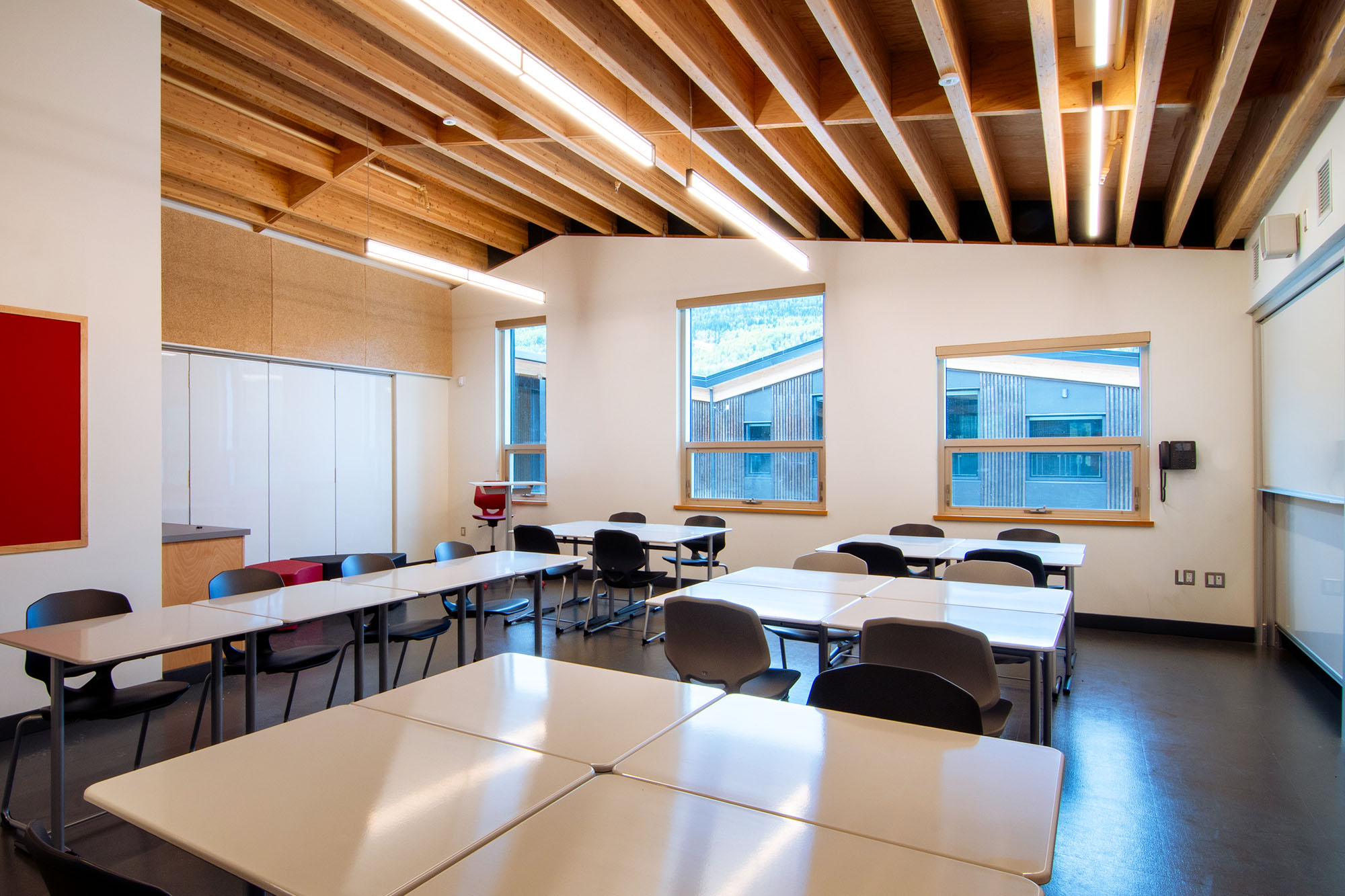
The design solution is organized around the principles of 21st century learning, with classrooms and break-out rooms arranged in clusters around shared multi-use commons. This flexible organization is best able to support individual students’ most effective modes of learning, special needs, and socializing – resulting in youth who feel supported, want to learn and have improved educational outcomes. Specialized teaching spaces have been designed for the provincial curriculum and the specific cultural needs of the Gitxsan youth. These spaces include: fine arts, carving shop, trades shop, culinary arts, textiles, traditional life skills, and a science lab. Outdoor activities are central to the Gitxsan culture, so these programs extend outside to covered areas, where traditional practices are best learned.
Related work: Featured First Nations Schools Wood Innovation